


Savannah Anne’s Non-Verbal Communications Workbook for Kids and Teens
$14.99
Savannah Anne’s Non-Verbal Communications Workbook for Kids and Teens is a A kid‑friendly nonverbal communication workbook that teaches eye contact, facial expressions, gestures, posture, and social awareness. Designed for ESE, IND, EBD, ASD, and communication‑skills learners, Savannah Anne helps children and teens understand the quiet signals people use every day.
Description
Savannah Anne’s Non-Verbal Communications Workbook for Kids and Teens is training for one of the most important skills a child can learn, yet it’s rarely taught in a clear, friendly, and practical way. Savannah Anne’s Non‑Verbal Communications Book gives children a warm, accessible introduction to the quiet signals people send every day — through their eyes, faces, posture, gestures, and behavior. This book is designed for kids, teens, and even young adults who need help understanding social cues, emotional signals, and the “unspoken language” of everyday interactions. It is ideal for classrooms, counselors, caregivers, homeschool families, and anyone supporting a child’s social‑emotional development.
Children often struggle to understand what someone means when they aren’t speaking. They may miss subtle facial expressions, misunderstand body language, or feel confused by social situations. Savannah Anne guides them through these challenges with simple explanations, friendly examples, and real‑world scenarios that make learning feel natural and safe. Her voice is gentle, encouraging, and easy for children to relate to, making this book a valuable tool for emotional literacy and confidence building.
Eye Contact Children learn what eye contact means, why people use it, and how it changes depending on the situation. Savannah Anne explains friendly eye contact, shy eye contact, uncomfortable eye contact, and how to use eye contact respectfully in conversations. Kids discover when it’s okay to look away, how to show they’re listening, and how eye contact helps people feel connected.
Facial Expressions This section teaches children how to recognize emotions by looking at someone’s face. Savannah Anne’s Non‑Verbal Communications Book introduces expressions like happy, sad, confused, worried, excited, frustrated, and thoughtful. She explains how expressions can change quickly, how people show mixed emotions, and how to match your own expression to what you’re trying to say. Children learn that faces tell stories — even when words don’t.
Body Gestures Kids explore the meaning behind posture, movement, and gestures. Savannah Anne explains crossed arms, fidgeting, leaning in, leaning away, stiff posture, relaxed posture, and the signals people send without realizing it. Children learn how gestures can show interest, boredom, nervousness, confidence, or discomfort. This helps them understand others more clearly and express themselves more effectively.
Sitting Posture Posture is one of the most overlooked parts of non‑verbal communication. Savannah Anne’s Non-Verbal Communications Workbook for Kids and Teens teaches children how sitting posture affects the message they send. Kids learn how posture changes in school, at home, in groups, and in quiet settings. They discover how posture can show confidence, respect, attention, or uncertainty — and how small adjustments can make communication easier.
Social Conditions This section helps children understand how behavior changes depending on where they are and who they’re with. Savannah Anne explains how to “read the room,” how group dynamics work, and how to adjust behavior in different environments. Kids learn how social expectations shift in classrooms, playgrounds, family gatherings, and public places. This builds awareness, adaptability, and social confidence.
Throughout the book, there are simple pictures and language, friendly examples, and gentle guidance to help children understand the world around them. The goal is not perfection — it’s awareness, confidence, and connection. Children learn how to interpret signals, respond thoughtfully, and communicate more clearly in everyday life.
This book supports emotional intelligence, social‑emotional learning, youth development, and communication skills — all essential for healthy relationships and personal growth. It pairs beautifully with counselor resources, homeschool curriculum, classroom lessons, and family learning time. Whether a child is shy, outgoing, anxious, curious, or simply trying to understand people better, Savannah Anne offers a steady, encouraging voice that makes learning feel safe and empowering.
Related products
-
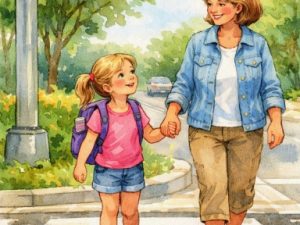
Savannah Anne’s Safe Adventure
Savannah Anne’s Safe Adventure™ teaches young children how to explore their neighborhood safely through a gentle, easy-to-understand story. With clear visuals and simple real‑world safety tips, this early‑learner book helps kids build confidence, awareness, and smart habits during everyday adventures. Perfect for ages 4–7, parents, teachers, and homeschoolers.$12.99 Add to cart -

A Teen & Adult Handwriting Workbook
Florida’s new cursive law requires students to master cursive before moving on to middle school — but older kids never learned it. This Teen & Adult Handwriting Workbook teaches clear, modern cursive for secure signatures, readable handwriting, and real‑world writing skills. A fluid cursive signature offers powerful protection against identity theft, making this workbook essential for teens, college students, and adults who need to catch up.$24.99 Add to cart -
Cursive The Easy Way for Children
$14.95 Add to cartA sturdy, coil‑bound cursive handwriting workbook for ages 6–12. Includes clear tracing pages for all cursive letters, smooth connections, and practice words. The exclusive Manos Books flat‑lay design creates a durable, comfortable writing surface for daily handwriting practice. -

The St. Augustine Florida Adventure
The St. Augustine Florida Adventure: Savannah Anne and Kendel and the stories of America's Oldest City is a disability‑inclusive exploration of St. Augustine, blending real history, communication‑friendly storytelling, and rare discoveries beyond the usual tourist stops. Savannah Anne and her best friend Kendle—who uses a wheelchair and communicates in her own unique way—spend a full day uncovering landmarks, hidden stories, and gentle learning moments designed for readers ages 8 and up. Featuring authentic historical photos paired with modern images, this book supports visual learners, wheelchair users, and readers with communication or cognitive differences. Perfect for families, classrooms, therapists, and anyone seeking an accessible, meaningful introduction to America’s oldest city.$15.99 Add to cart


